
How to stop 202 Second St.

Disclaimer: most of this post has been generated by AI – wonderful stuff! 

For the past few days the BR has wondered how to approach the problem of the planning obscenity at 202 Second St. Many posters on Facebook have suggested letters to Council and approaching Council personally but few have made concrete proposals as to what to do next. In other words what can individual Councillors do to stop or seriously amend the proposal.

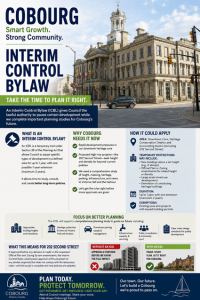
Well here is a way and written by AI – so it must be good and on comprehensive evaluation of the texts it is bang-on! click on the image to read the Coles Notes version and the AI text is copied below.

It will be noted that two things are apparent here one is to stop the proposal and the other is that if the proposal goes ahead the DownTown core will face a parking crisis. The Parking Crisis should be the basis of the ICBL not the 202 Second Street building.

“An Interim Control By-law (ICBL) could be structured to pause the 202 Second Street proposal, but it must be based on a legitimate planning purpose—not simply opposition to a specific development.

The current proposal seeks amendments to both the Official Plan and Zoning By-law to permit a mixed-use building with a site-specific height exception (originally proposed at nine storeys) on lands at 202 Second Street.

A legally defensible ICBL could look something like this:

Purpose

Council would first pass a resolution stating that it intends to undertake a comprehensive planning study of the Downtown Core and Heritage Conservation District to determine:

  • appropriate building heights;
  • transitions between new and existing development;
  • protection of views to Victoria Hall and the harbour;
  • downtown parking supply and management;
  • infrastructure capacity;
  • compatibility with heritage resources;
  • urban design standards for large mixed-use developments.

This planning study is the legal foundation of the ICBL.

Geographic Area

Rather than applying town-wide, the by-law could apply to:

  • the Downtown Central Area;
  • the Heritage Conservation District;
  • lands surrounding Victoria Hall; or
  • a defined study area that includes 202 Second Street and nearby blocks.

Limiting the area helps demonstrate that the by-law addresses a specific planning issue rather than targeting development generally.

Temporary Prohibitions

For the duration of the study, the by-law could prohibit:

  • new buildings exceeding a specified height (for example, six storeys);
  • Official Plan or zoning amendments seeking additional height or density;
  • mixed-use developments above a specified floor area;
  • demolition of contributing heritage buildings.

Existing uses and projects with issued building permits could be exempted.

Study Objectives

Council should direct staff (or outside consultants) to complete work such as:

  • a downtown height and massing study;
  • a heritage impact and viewshed analysis;
  • a parking strategy;
  • transportation and servicing studies;
  • public consultation.

The study should conclude with recommendations for permanent Official Plan and zoning amendments.

Effect on 202 Second Street

If enacted before Council approves the requested planning amendments, the ICBL would generally prevent approval of development that conflicts with its temporary restrictions while the study is underway. The application would effectively be put on hold until:

  • the ICBL expires;
  • Council repeals it; or
  • new planning policies are adopted following the study.

Whether it applies depends on the precise wording of the by-law and the procedural stage of the application.

Legal Considerations

The municipality would need to demonstrate that the ICBL:

  • serves a bona fide planning purpose;
  • is supported by a real planning study;
  • is not enacted solely to stop one unpopular project.

Ontario courts and the Ontario Land Tribunal have generally upheld Interim Control By-laws where municipalities genuinely needed time to evaluate planning policy, but they have been skeptical where a municipality appeared to be using an ICBL merely to block a particular development without undertaking meaningful planning work.

For Cobourg, an ICBL would be strongest if it addressed broader downtown planning issues—such as height, heritage compatibility, parking, and urban design—rather than referring specifically to 202 Second Street. If those broader policies ultimately resulted in lower height limits or different design standards, they would then apply consistently across the study area rather than only to one proposal.”

Leave a Reply

Your email address will not be published.

Notice to Reader: Sign up to receive posts when posted - don't waste your time coming back each day to see if there is a new post we will send it to you!

X